
Set up your TPM program in one plan,
track implementation step by step
OPEXIA opens a ready roadmap for every customer with Classic TPM (5S foundation + 8 pillars) or the OpEx model, and brings the pillars' JIPM step ladders, the master plan, the Gantt and the budget together in one set of data. Consultants and the customer team work in the same plan; grupas.ai highlights delays and risks.
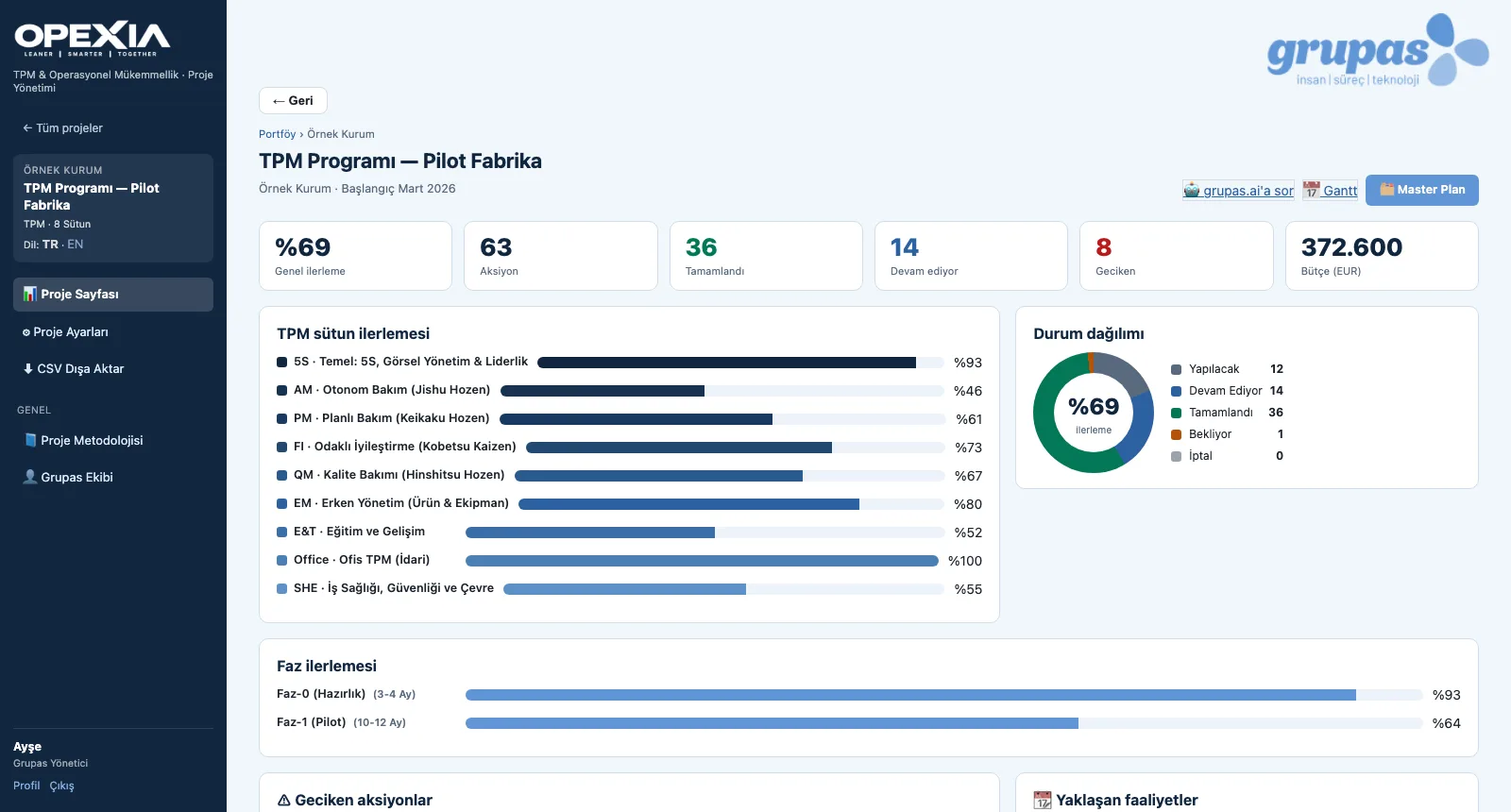
Don't let your TPM program scatter across files
OPEXIA keeps the program in one place: roadmap, pillar steps, master plan, Gantt, team, activities and budget share the same data, so everyone looks at the same current picture.
- The master plan lives in a spreadsheet, pillar steps in slides, activities in e-mails — none of them update each other.
- Consultants and the customer team work from different lists; who owns which task becomes unclear.
- Delays are noticed only at the monthly meeting; a lagging pillar is spotted late.
- Planned versus actual man-days and budget are tracked separately, and the picture is never complete.
Six capabilities, one application
OPEXIA capabilities follow the natural order of a program: choose the model, structure the pillars, plan, track implementation, organize the team and anticipate risks.
TPM and OpEx Roadmaps
Classic TPM (8 pillars) or the OpEx model — every project opens with a ready roadmap.
Explore StructurePillars and Step Ladders
Every pillar with its own card, vision and JIPM step ladder.
Explore PlanMaster Plan, Gantt and Budget
Every task in one master plan; Gantt and budget from the same data.
Explore TrackImplementation Tracking
Follow implementation step by step with the project dashboard, Kanban and progress log.
Explore OrganizeOrganization and Activity Plans
Grupas and customer teams in one organization; activities day by day, hour by hour.
Explore Anticipategrupas.ai Insights
grupas.ai finds delays and inconsistencies, anticipates risks and suggests assignments.
ExploreA tour of the screens
Pick a capability and click the steps; click an image to enlarge it.
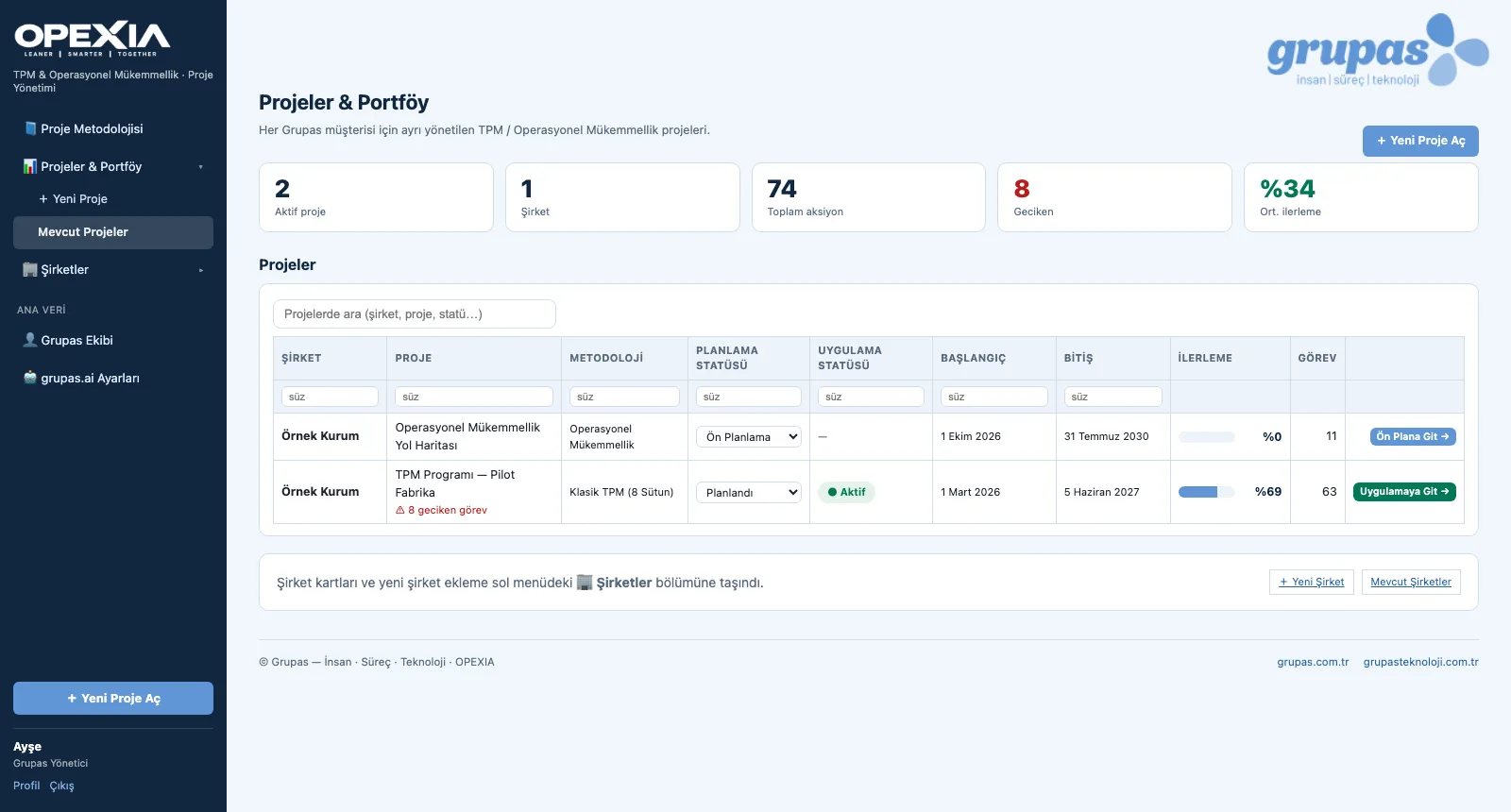
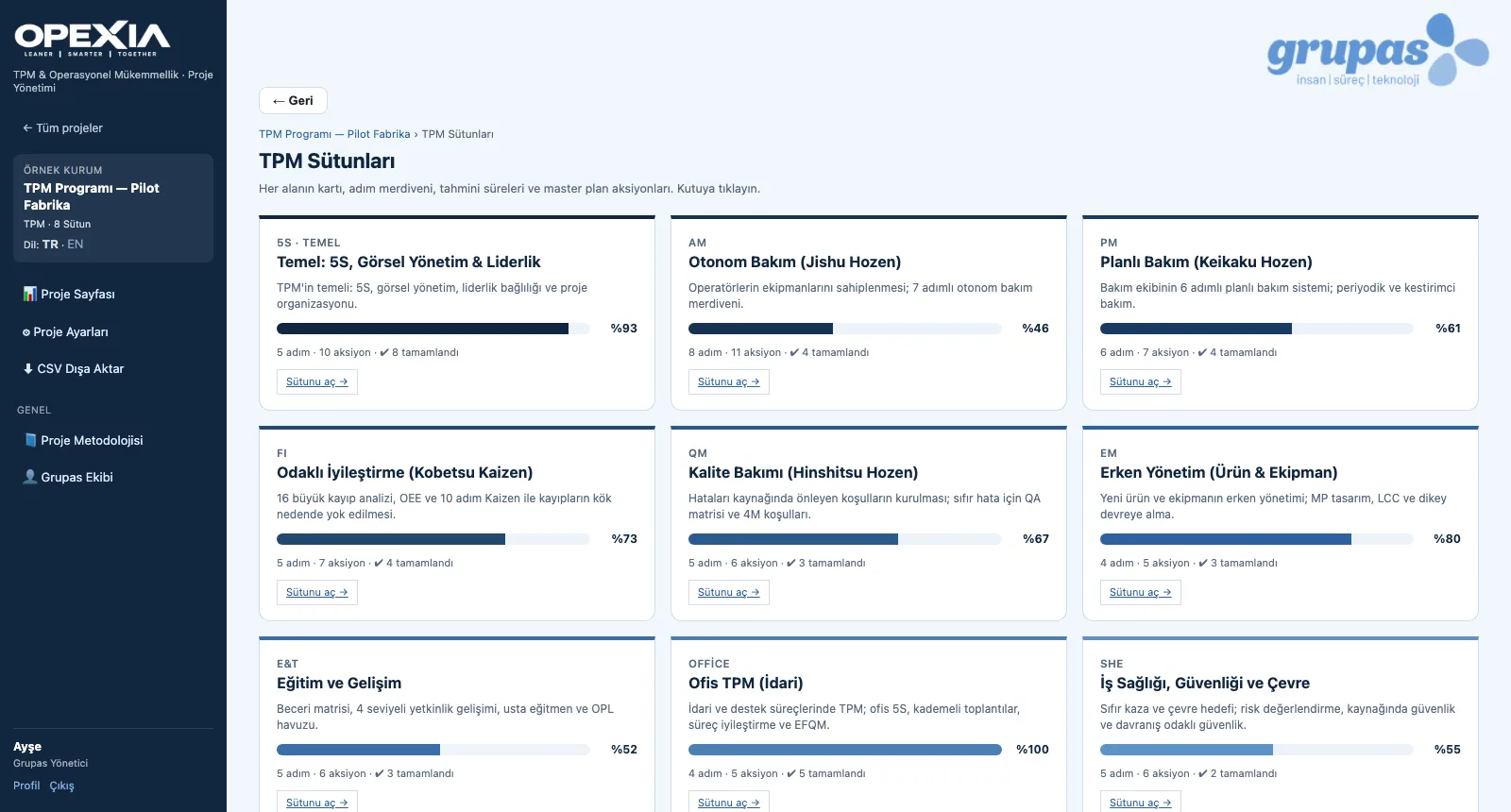
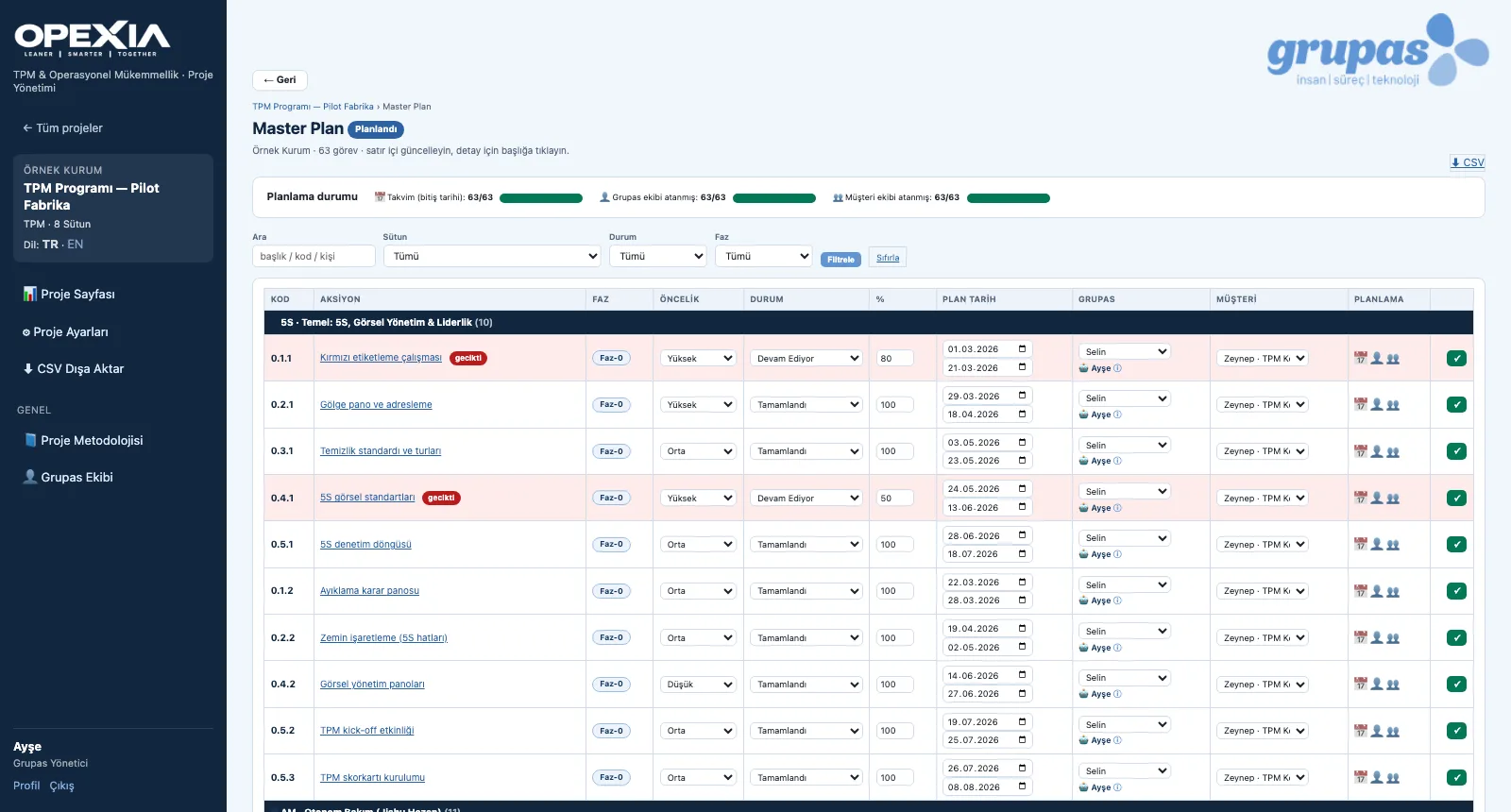
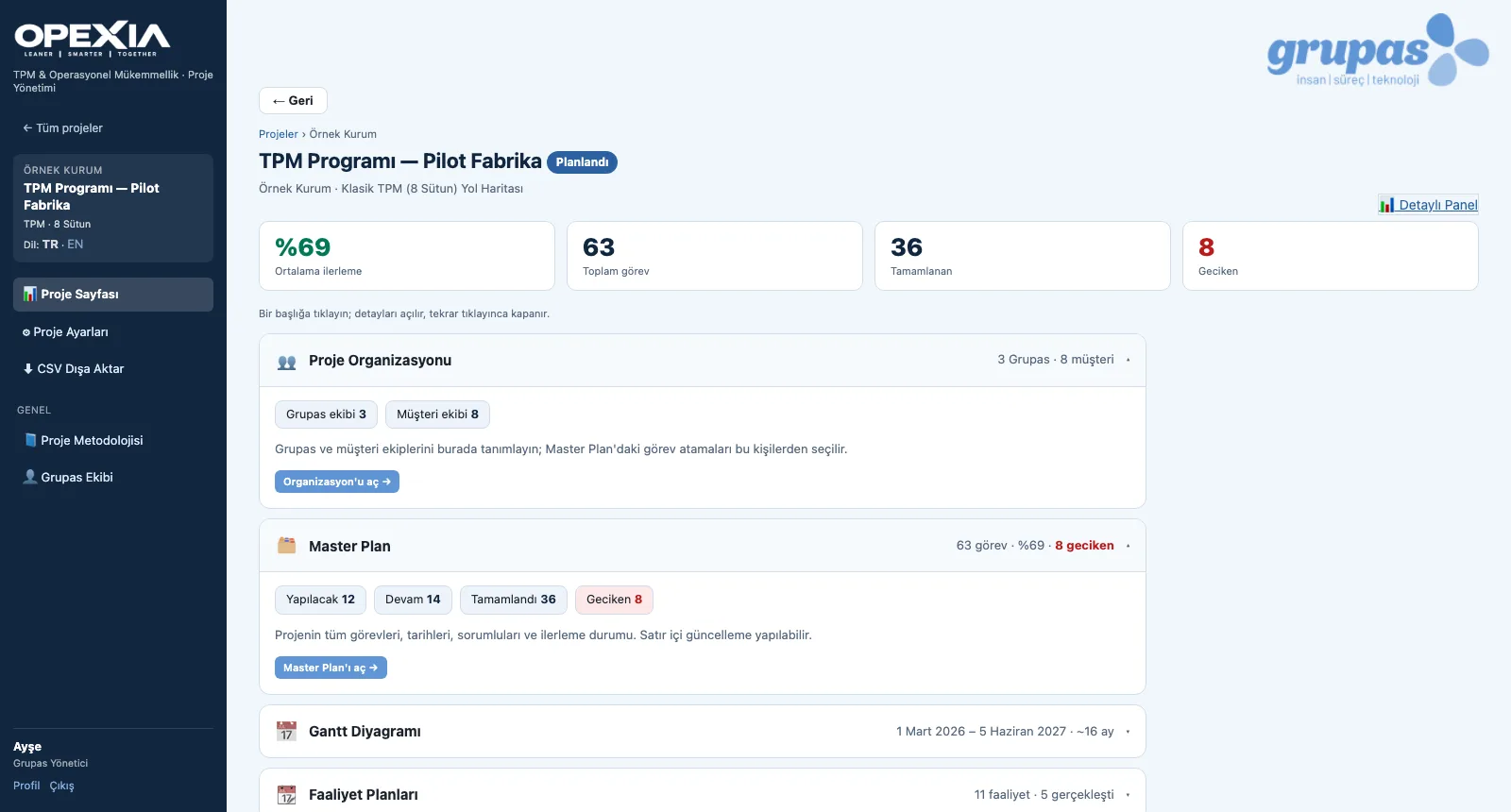
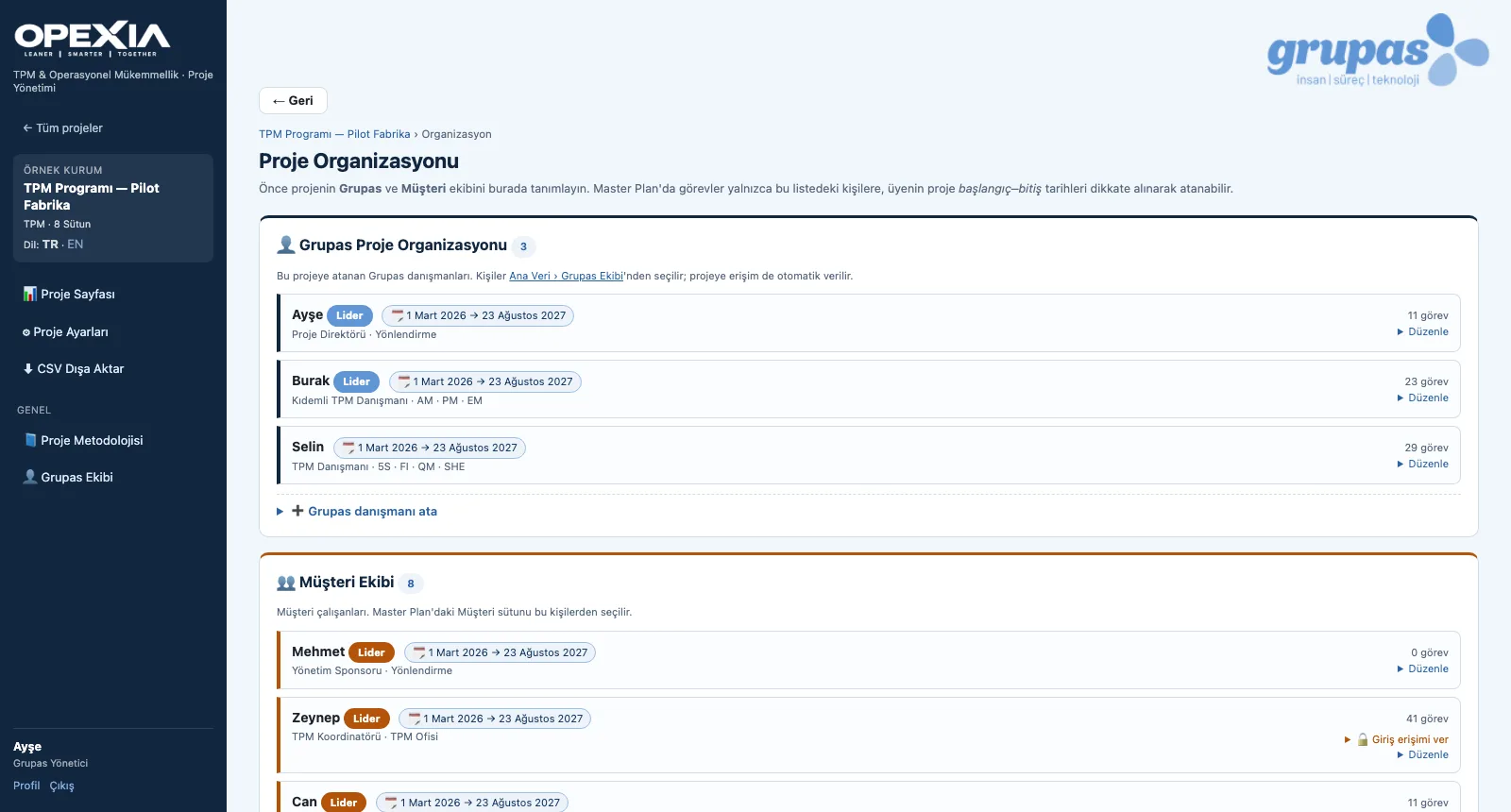
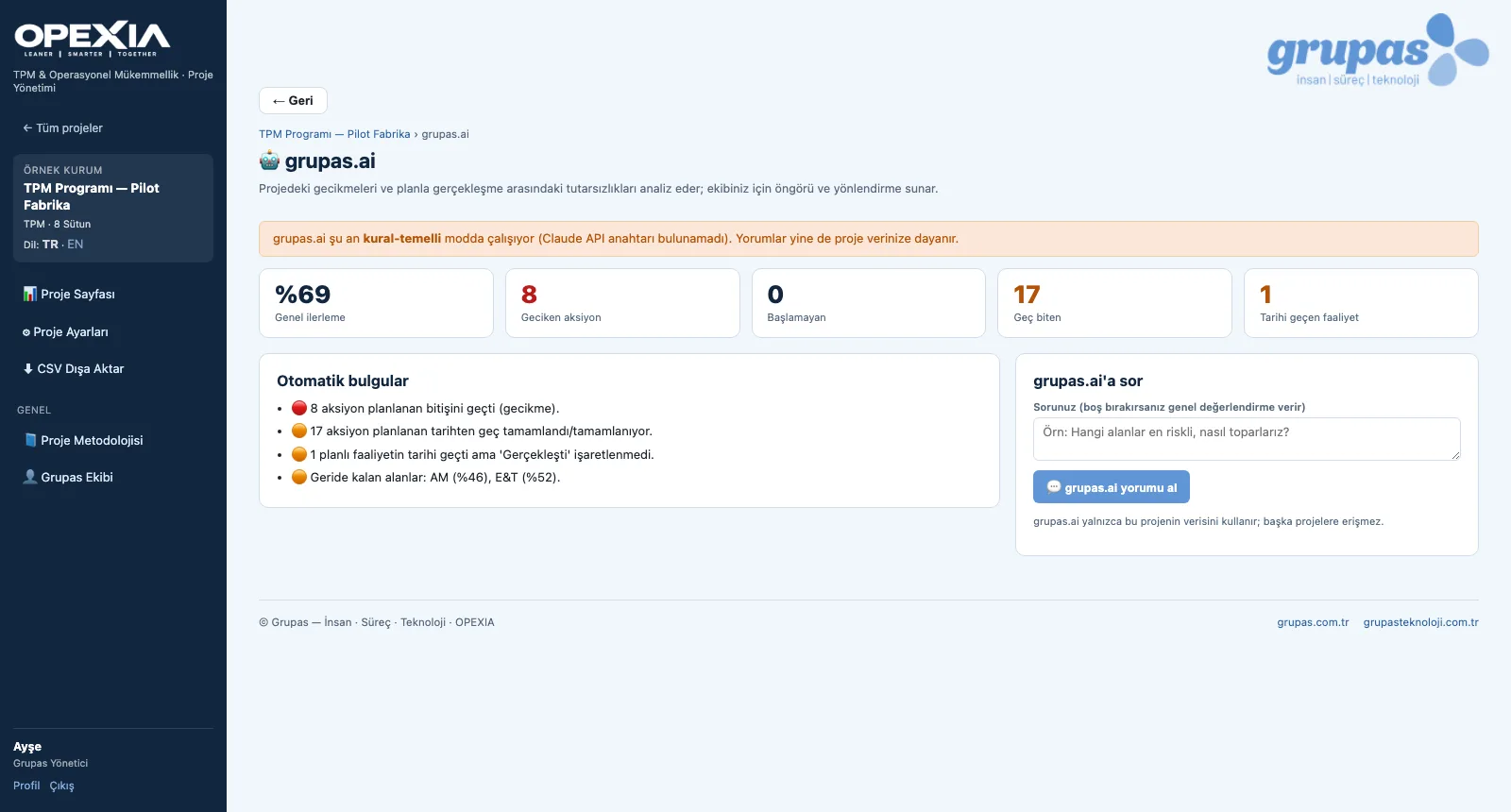
Screens are shown with sample data; the application interface is in Turkish.
What it brings your TPM program
A ready roadmap
Choose Classic TPM or the OpEx model; pillars, steps, activities and draft dates are set up when the project is created.
JIPM step ladders
Each step has an objective, sub-steps, potential benefits and activities; pillar teams climb a shared ladder.
A schedule that fits the scale
Activity durations are kept for small / medium / large scale; changing the scale recalculates durations and the Gantt.
Planned ↔ actual
Actual dates, man-days and a progress log on every action; overdue tasks are flagged automatically.
Two teams, one plan
Grupas consultants and the customer team in one organization; tasks assigned with RACI, activities planned by the hour.
Role-based access
The Grupas administrator sees the whole portfolio; consultants and customer employees see only their projects and tasks.
grupas.ai insights
Finds overdue, unstarted and late-finishing actions and lagging pillars; suggests assignments per task.
Budget and earned value
Planned and actual man-days, budget and earned value by pillar and phase; the master plan exports to CSV.
For every plant where equipment and people improve together
Discrete manufacturing
TPM programs in automotive and suppliers, metalworking, machinery, electrical-electronics and appliance plants.
Process industries
Equipment-intensive continuous production: food and beverage, chemicals, plastics, paper, glass, foundry and energy.
Consulting and program offices
Consulting teams and corporate program offices running TPM / OpEx programs across several customers or plants.
- TPM / OpEx coordinators and program offices
- Plant, production and maintenance managers
- Pillar leaders and pillar teams
- TPM consultants, trainers and project directors
One package, the license that fits you
Every feature in every license. Choose your license model and we will prepare a quote for your number of users and projects.
Frequently asked questions
What is OPEXIA?+
How does Classic TPM differ from the OpEx model?+
What is the difference between the pillar and phase methods?+
What is the scale for?+
What does the customer team see?+
See your TPM program in OPEXIA
Write to us for a live walkthrough on a sample TPM program.